

Component prices are up. Lead times have stretched. And if you are trying to make sense of why, whether it is memory costs that seem to have doubled overnight, discrete semiconductors that are suddenly harder to source, or PCB materials your supplier is putting on allocation, this article sets out the full picture.
Beyond RAMageddon: The Full Story of the 2026 Components Crisis So Far…
If you have been watching component prices climb and lead times stretch over the past several months, you are not imagining it. What the press has dubbed "RAMageddon" is only the most visible symptom of a much deeper and wider crisis running through the entire electronics supply chain. For engineers, specifiers and procurement teams, understanding the full picture is not just useful it is essential for protecting your projects and your margins in 2026.
The Board Itself Is Getting More Expensive
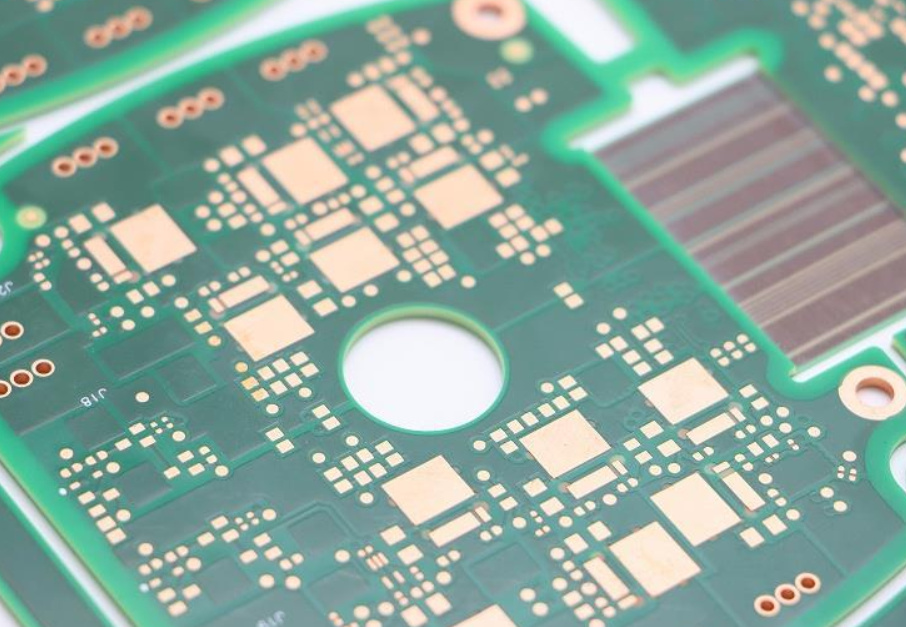
Before a single chip is placed, the cost of building a circuit board has already risen sharply. Copper-clad laminate, the base material for virtually every PCB, is up 45% compared to recent periods, with some suppliers now operating on allocation quotas and lead times stretching to six months. Fiberglass cloth a less talked about but equally critical input is in its own supply deficit, entirely independent of copper pricing pressures.
At the higher end of the market, advanced server and AI-grade boards now require specialist materials such as M9 laminates and HVLP4 copper foil to handle the signal speeds demanded by modern designs. These materials are in genuinely short supply and processing costs for them have risen 10 to 20% year on year.
Rising gold prices have pushed manufacturing costs for ENIG surface finishes standard on most precision boards up by as much as 37%. When you factor in that gold and copper-clad laminate together account for roughly 40 to 55% of a multilayer PCB's raw material cost, the compounding effect on finished board pricing is significant. Lead times for advanced PCB materials have reached up to 140 days in the tightest segments, while standard FR-4, which once shipped in days, is now running at around four weeks from major suppliers.
This is a structural squeeze driven by AI infrastructure demand absorbing laminate capacity at a rate that conventional supply simply cannot match.
RAMageddon: The Numbers Behind the Nickname
The memory crisis has its own momentum and its own set of causes, but it lands on top of everything else at the worst possible moment.
DRAM contract prices rose an estimated 90 to 95% quarter on quarter in Q1 2026, with a further 58 to 63% increase projected for Q2. SSD prices followed a similar trajectory, up 53 to 58% in Q1. In the spot market, individual memory components have been reported at prices up to 700% above historical norms in some cases, with supplier quotes valid for hours rather than days. Lead times for memory components now typically run at 32 to 40 weeks or beyond.
The root cause is the diversion of manufacturing capacity. Samsung, SK Hynix and Micron are all prioritising High Bandwidth Memory for AI accelerators, a product that commands dramatically higher margins than standard DDR4 or DDR5. SK Hynix has confirmed its entire 2026 DRAM and NAND production is already committed to AI customers. Micron has announced investments exceeding $150 billion in new capacity, but none of that comes online before 2027 at the earliest. In the meantime, the consumer and industrial memory markets are competing for whatever remains.
The downstream effects are already visible. Major PC manufacturers have raised prices by $130 to $230 per unit on higher memory configurations. Smartphone OEMs are redesigning products to use less RAM rather than absorb the cost
The Nexperia Impact
Late last year, Nexperia, one of the world’s largest producers of discrete semiconductors, MOSFETs, small-signal transistors, diodes and power devices, became the most visible example yet of what happens when geopolitics collides with a globally distributed supply chain. Following a Dutch government intervention over concerns about technology transfer to China, the company effectively split in two, leaving OEMs mid-programme with uncertain supply, unresolved traceability questions and components of disputed compliance status.
Honda absorbed a $969 million hit to operating profit and lost 110,000 vehicles from its production schedule. Nissan, Volkswagen and BMW all reported ongoing exposure
The lesson is not specific to Nexperia. It is a signal that even the most ordinary, low-cost discrete components carry geopolitical risk when their supply chain runs through politically contested territory. For specifiers and procurement teams, single-source dependencies on manufacturers with complex international ownership structures deserve the same scrutiny as any other programme risk.
A Geopolitical Perfect Storm
None of these crises exist in isolation. They share a common backdrop of converging geopolitical pressures that show no sign of easing in the near term.
China controls approximately 79% of global tungsten production and 90% of rare earth processing. In April 2025 it introduced export controls on seven heavy rare earth elements including dysprosium, terbium and yttrium, that are essential for permanent magnets, advanced semiconductor processes and precision electronics. European rare earth prices reached up to six times Chinese domestic prices as a result. A partial suspension was agreed following US-China diplomatic discussions, but the April 2025 controls were never fully lifted and remain in force. The structural dependency has not changed; the tap has simply been turned down rather than off.
The ongoing conflict in the Middle East has severely disrupted shipping through the Strait of Hormuz, the waterway through which a significant share of the energy powering chip fabs is transported. Since Iranian forces declared the strait closed to commercial traffic in early March 2026, tanker movements have fallen dramatically and war-risk premiums have surged. South Korea imports over 70% of its crude oil from the Middle East; Taiwan's TSMC runs almost entirely on imported energy. The disruption has had direct consequences for other critical materials. Helium, essential for wafer cooling and leak detection, has seen spot prices double following strikes on Qatari production facilities, with fabs in Taiwan and South Korea now rationing supply. Bromine, essential for circuit etching, has surged to $12,000 per metric ton, with one Israeli supplier controlling nearly 40% of global supply and 97% of South Korea's imports.
The Russia-Ukraine war, now entering its fourth year, removed Ukraine and Russia as major suppliers of semiconductor-grade neon gas historically accounting for 40 to 70% of global supply and palladium, used in sensor and memory chip production. Supply chains have partially adapted, but prices remain elevated and alternative sourcing remains fragile.
Add US tariffs on Chinese semiconductors raised from 25% to 50%, a 25% tariff on advanced chip imports introduced in January 2026, and a PCB industry where the US share of global production has collapsed from approximately 30% in 2000 to just 4% today, and you have a procurement environment unlike anything most teams have operated in before.
What This Means If You're Specifying or Buying Right Now
The instinct to wait for prices to normalise is understandable, but the consensus from credible industry sources is that meaningful relief is not expected before 2027 at the earliest, and for some categories, 2028. The companies absorbing the least disruption right now share a few common characteristics: they moved early, they diversified and they stopped treating components as a late-stage purchasing line item.
Practically, that means several things worth acting on now. Memory and storage need to be treated as schedule-critical inputs at the design stage, not commodities sourced at the end. Any design still specifying certain parts that are at risk should be reviewed for different compatibility if more readily avalible. PCB materials specifications, particularly for advanced laminates, need to be on your procurement radar at the same time as the design itself, since 140-day lead times make last-minute sourcing unworkable. On the discrete semiconductor side, any single-source dependency on components with Chinese manufacturing exposure deserves a hard look at qualifying alternatives.
The broader lesson of Nexperia, of RAMageddon and of the PCB materials squeeze is the same: the electronics supply chain is no longer a background operational function. It is a strategic variable that directly affects what you can build, when you can build it, and what it will cost.
How Texcel Can Help
At Texcel Technology, we work alongside engineers and procurement teams as a contract manufacturing partner which means we are living inside these supply chain pressures every day. Whether you are mid-design and want to sense-check component availability before committing to a BOM, or you are managing an existing programme and facing lead time or pricing pressure, we are well placed to have a practical conversation.
If the current supply environment is affecting your programmes, get in touch with the Texcel team and we would welcome the opportunity to talk through your specific situation and explore where we can help.